
Anxiety is one of those things that sounds simple when people talk about it, but feels very different when you’re actually in it
For most of my clients who come in with anxiety they have already tried different methods. Breathing techniques. Journaling. Talking it through. Trying to “think differently.” Maybe it helps for a moment—but then the anxiety finds its way back in the same exhausting loop.
So then the question becomes: what is actually driving this?
What is EMDR?
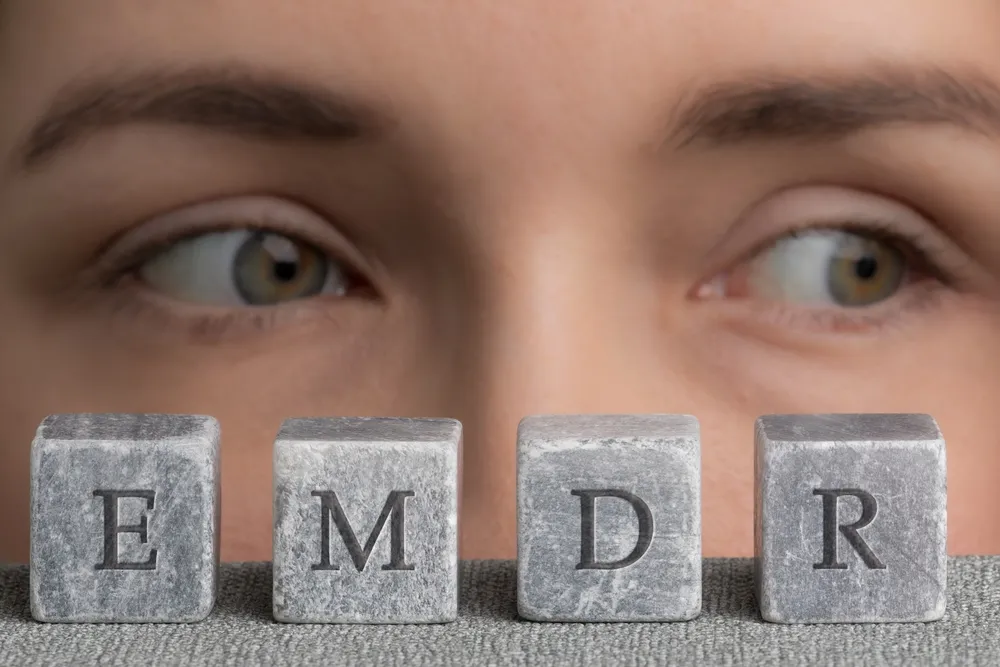
EMDR (Eye Movement Desensitization and Reprocessing) is a therapy that helps your brain and body process experiences that didn’t fully get resolved.
Not just the “big T trauma,” but the smaller moments too. The moments where something happened and you didn’t feel supported, seen, or safe enough to make sense of it.
The goal isn’t to erase anything.
It’s to help your system stop reacting like the past is still happening in the present.
Ohhh now this is getting interesting!
Anxiety usually isn’t random
Most anxiety makes sense when you slow it down enough.
Even if you can’t point to one specific moment, there are usually patterns:
growing up feeling like you had to stay alert
relationships where you couldn’t fully relax
feeling like you had to anticipate other people’s moods
not really knowing when things were “okay” versus “about to change”
And over time your system starts to learn:
“stay ahead of it”
“don’t fully settle”
“be prepared just in case”
“something could go wrong”
So even when your life is calm now, your body didn’t get the memo to change.
Where EMDR comes in
A lot of people don’t describe anxiety as thoughts. They describe it like:
“I know I’m fine, but my body doesn’t feel fine.”
“I can’t shut it off.”
“I’m always bracing for something bad to happen.”
EMDR works with that layer.
It helps bring the nervous system out of old patterns that were built in past experiences and never fully processed.
So instead of just managing anxiety on the surface, you’re actually working with what created the pattern underneath it.
wait , Lexi this is getting better keep going!
What changes over time
When EMDR starts working well, it’s not always dramatic—it can be subtle shifts:
Things don’t hit the same way anymore.
What used to spike you doesn’t fully take you out.
Your body isn’t always on alert.
There’s more settling. Less constant scanning.
Old memories lose their grip.
They might still exist, but they don’t carry the same charge.
You respond instead of react.
There’s more space between the feeling and what you do with it.
What the research says
EMDR is one of the most researched treatments for PTSD and trauma-related symptoms, and it’s considered evidence-based for trauma work.
When it comes to anxiety, the research is still growing—but clinically, what we see is that EMDR is especially helpful when anxiety is tied to:
past emotional experiences that still feel “active” in the body
panic or activation that feels bigger than the moment
chronic stress patterns that never fully settled
fear responses that don’t match the current situation. Hey there worst case scenario brain.
What EMDR actually looks like in real life
It’s not someone analyzing you or telling you what your anxiety “means.”
It usually looks like:
identifying what’s coming up right now
noticing where it lives in your body
gently connecting it to earlier experiences
using bilateral stimulation (eye movements, tapping, or sound)
letting your system process at its own pace
And you don’t have to tell every detail of your story for it to work.
That’s something a lot of people are relieved to hear!
A final thought
Most anxiety isn’t irrational.
It’s protective.
It’s a system that learned how to keep you safe in environments that may not have felt fully safe.
The problem is that the system doesn’t always update itself when your life changes.
EMDR is one way of helping that update happen—not by forcing it, not by talking yourself out of it and by letting your system finally process. Whoo ha thats going to feel gooooood
And when that happens, anxiety doesn’t always disappear completely.
But it stops running the whole show. Want to experience this in real life?Jump in and book a session!