
Understanding a Powerful Trauma Treatment Approach
Eye Movement Desensitization and Reprocessing (EMDR) is a structured, evidence-based psychotherapy approach designed to help individuals process and heal from distressing life experiences and trauma. Originally developed by Francine Shapiro in the late 1980s, EMDR has become one of the most researched and widely recognized treatments for trauma and post-traumatic stress.
Unlike traditional talk therapy, EMDR focuses not only on discussing difficult experiences but also on helping the brain reprocess painful memories so they become less emotionally overwhelming.
How Trauma Affects the Brain
When people experience traumatic or highly distressing events, the brain sometimes struggles to fully process what happened. Instead of the memory being stored in a normal and adaptive way, aspects of the experience can become “stuck” in the nervous system.
This can lead to symptoms such as:
- Anxiety or panic
- Emotional overwhelm
- Intrusive thoughts or flashbacks
- Hypervigilance
- Difficulty trusting others
- Negative beliefs about oneself
- Sleep disturbances
- Avoidance behaviors
- Emotional numbness or shutdown
Even when a person logically understands they are safe, their nervous system may continue reacting as if the danger is still present.
What Happens During EMDR Therapy?
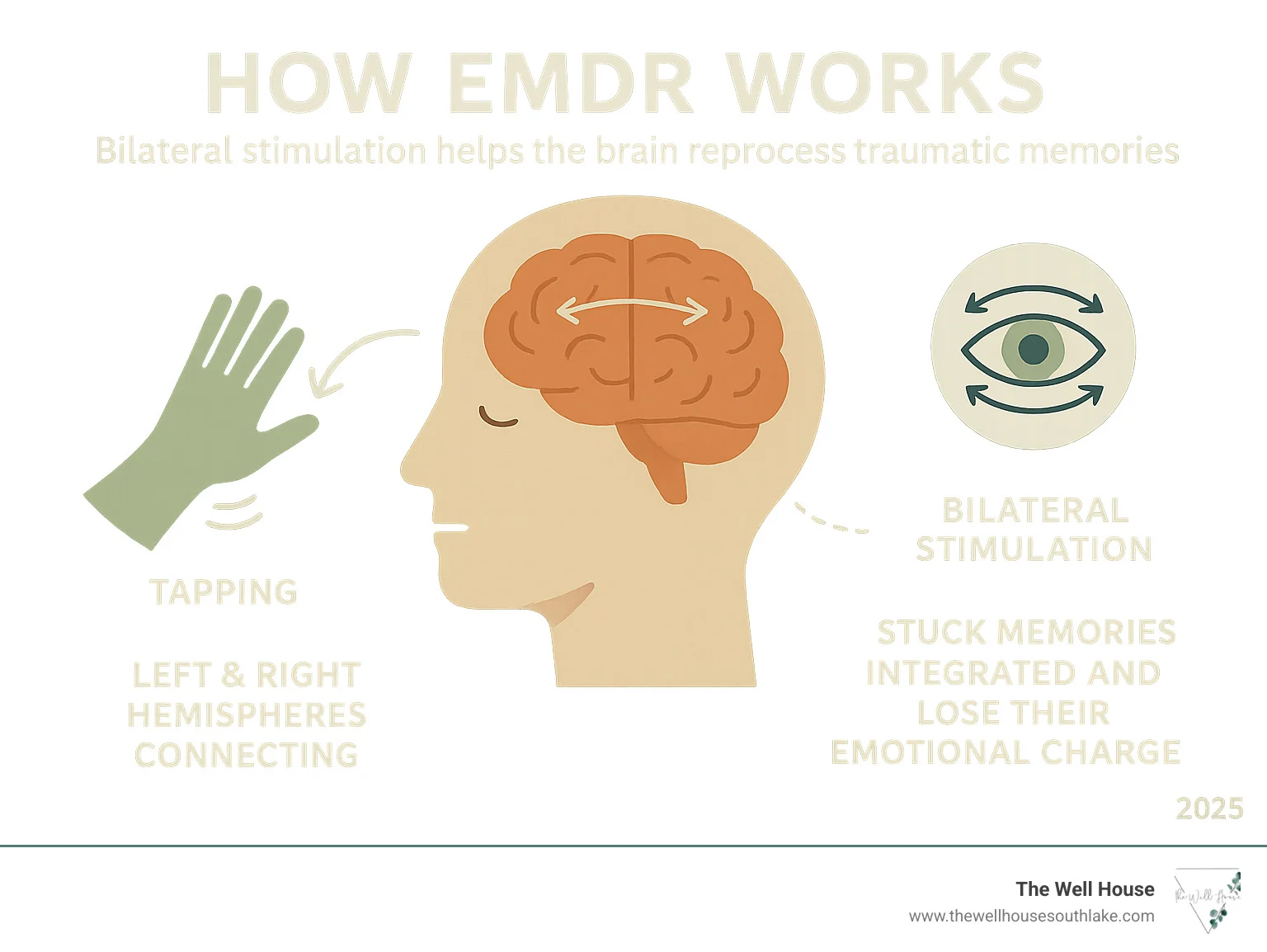
EMDR uses a process called bilateral stimulation, which may include eye movements, tapping, or auditory tones, while a person briefly focuses on distressing memories, emotions, or body sensations.
The goal is not to erase memories, but to help the brain reprocess them in a healthier and less distressing way.
Over time, clients often notice that:
- Disturbing memories feel less emotionally intense
- Triggers become more manageable
- Negative self-beliefs begin to shift
- Emotional regulation improves
- The body feels calmer and safer
- They feel more present in daily life
Many people describe EMDR as helping their brain “unstick” experiences that previously felt overwhelming.
EMDR Is More Than Eye Movements
Although eye movements are one component of EMDR, the therapy itself is a comprehensive treatment model. EMDR includes:
- History taking and treatment planning
- Building coping and grounding skills
- Identifying target memories and negative beliefs
- Reprocessing distressing experiences
- Strengthening positive beliefs and emotional resilience
- Body awareness and nervous system regulation
A well-trained EMDR therapist carefully guides the process to ensure that treatment feels safe, paced, and supportive.
What Can EMDR Help With?
While EMDR is best known for treating trauma and PTSD, it is also commonly used to support individuals struggling with:
- Anxiety
- Depression
- Attachment wounds
- Childhood trauma
- Panic attacks
- Relationship difficulties
- Grief and loss
- Low self-esteem
- Performance anxiety
- Medical trauma
- Stress related to life transitions
EMDR can be effective for both single-event trauma and long-standing patterns rooted in earlier life experiences.
Is EMDR Right for Everyone?
EMDR can be highly effective, but it is not a one-size-fits-all approach. Good EMDR therapy includes preparation, stabilization, and pacing based on the individual client’s needs.
For some individuals, therapy may begin with developing coping skills and nervous system regulation before processing traumatic memories directly.
A trained therapist can help determine whether EMDR is appropriate and how to tailor the process to best support healing.
The Importance of a Trauma-Informed Approach
Trauma treatment is most effective when clients feel emotionally safe, supported, and understood. Many EMDR therapists also integrate other approaches such as somatic therapy, attachment-focused work, mindfulness, and nervous system regulation techniques.
This integrative approach helps clients not only process painful experiences but also build resilience, emotional awareness, and healthier relationships.
Healing from trauma does not mean forgetting what happened. It means helping the mind and body process experiences in a way that no longer feels emotionally consuming.
EMDR therapy offers a structured and research-supported path toward healing for many individuals struggling with trauma, anxiety, and emotional distress. With the support of a trained therapist, clients can begin to feel safer in their bodies, more connected in their relationships, and more present in their daily lives.
If you are considering EMDR therapy, speaking with a trauma-informed mental health professional can help you determine whether this approach may be a good fit for your needs.