
There are moments in life that change us forever.
Sometimes it is a single event — an affair, a car accident, abuse, a loss, a medical trauma, or a moment where you no longer felt safe. Other times, it is years of emotional pain, criticism, neglect, chaos, or feeling like you had to survive instead of truly live.
And even when life keeps moving forward, part of you may still feel emotionally frozen in the past.
You may tell yourself:
“Why can’t I just let this go?”
“Why do I still react this way?”
“Why does my body still feel unsafe even when I know I’m okay?”
If this sounds familiar, you are not failing. Your nervous system may still be carrying unprocessed trauma.
What Does It Mean to Be “Stuck” in Trauma?
Trauma is not only about what happened to you. It is also about what your mind and body were unable to fully process at the time.
When something overwhelming happens, the brain can struggle to store the memory correctly. Instead of becoming a memory that feels finished and in the past, it can remain emotionally “active.” This is why certain sounds, situations, people, or emotions can suddenly trigger anxiety, panic, shame, anger, or emotional shutdown.
You may notice:
- Feeling emotionally reactive or overwhelmed
- Constant anxiety or hypervigilance
- Difficulty trusting others
- Feeling numb or disconnected
- Negative beliefs like “I’m not good enough” or “I’m unsafe”
- Flashbacks, nightmares, or intrusive thoughts
- Struggling to move forward even when you want to
Trauma can leave the nervous system feeling trapped in survival mode.
What Is EMDR Therapy?
Eye Movement Desensitization and Reprocessing, commonly known as EMDR, is a therapy approach designed to help the brain reprocess painful or traumatic experiences so they no longer feel as emotionally intense or overwhelming.
EMDR does not erase memories. Instead, it helps the brain process them in a healthier, more adaptive way.
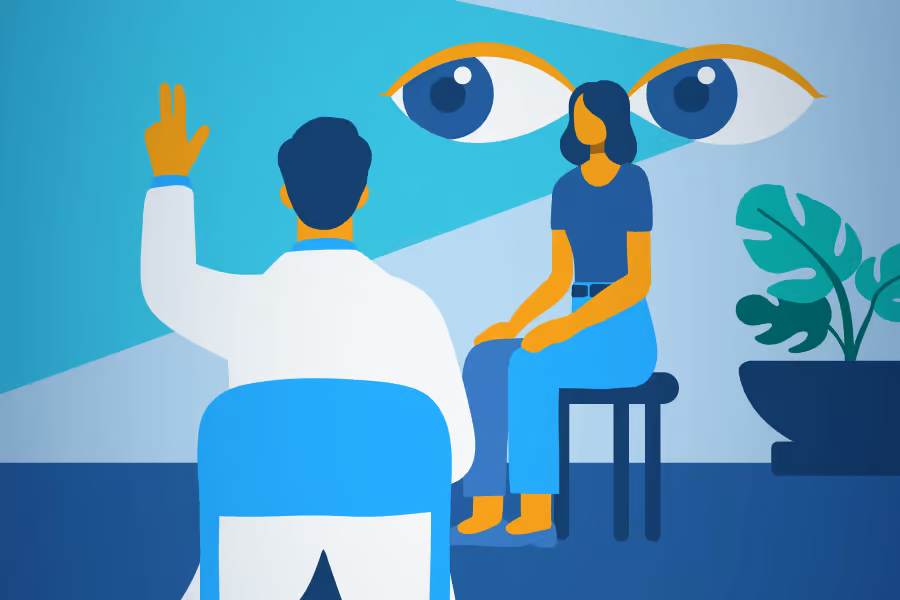
During EMDR therapy, a therapist guides you through recalling distressing memories while using bilateral stimulation — often through eye movements, tapping, or sounds that activate both sides of the brain.
This process helps the nervous system begin to:
- Separate the past from the present
- Reduce emotional intensity around memories
- Shift negative beliefs
- Create a greater sense of safety and regulation
Many people describe EMDR as finally feeling like their body and mind can “exhale.”
Why Trauma Feels Stored in the Body
Trauma is not just logical. It is physical.
Even when your mind understands that something is over, your nervous system may still respond as if the danger is happening right now.
This is why people often say:
- “I know I’m safe, but I don’t feel safe.”
- “I keep repeating the same patterns.”
- “I can’t stop overthinking.”
- “I shut down emotionally.”
- “I feel stuck.”
Trauma responses are not weaknesses. They are protective survival responses your body learned to keep you safe.
EMDR works by helping the brain and body realize:
“I survived. I am here now. I do not have to stay trapped in that moment anymore.”
What EMDR Can Help With
EMDR is often used for:
- Childhood trauma
- Anxiety and panic
- Relationship wounds
- Betrayal and infidelity
- PTSD
- Grief and loss
- Medical trauma
- Low self-worth
- People-pleasing patterns
- Fear, shame, or emotional triggers
It can also help people who feel emotionally stuck but cannot fully explain why.
Sometimes trauma is not one major event. Sometimes it is years of carrying emotional pain silently.
Healing Does Not Mean Forgetting
One of the biggest misconceptions about healing is that you should “just move on.”
Healing is not pretending something never happened.
Healing is being able to remember what happened without your nervous system reliving it every single time.
It is learning that your past may be part of your story — but it does not have to control your present.
What Reprocessing Can Feel Like
As people move through EMDR therapy, they often begin to notice:
- Less emotional intensity around painful memories
- Increased self-compassion
- Better emotional regulation
- Feeling calmer in situations that once felt triggering
- Greater confidence and clarity
- Improved relationships
- A stronger sense of self
Many clients describe it as finally feeling emotionally “unstuck.”
Not because the pain was ignored, but because it was finally processed.
You Deserve to Feel Safe Again
If you have been carrying pain for a long time, you may have started believing this is simply who you are.
But trauma responses are not your identity.
You are not “too emotional.”
You are not “broken.”
You are not weak because your nervous system adapted to survive difficult experiences.
Healing is possible.
And while trauma can deeply impact the mind and body, it does not mean you are destined to stay stuck there forever.
With support, safety, and the right therapeutic tools, your brain and nervous system can begin to heal.
You deserve more than survival mode.
You deserve peace, connection, safety, and the ability to fully live in the present again.